


Yann Furic
B.B.A., M. Sc., CFA®
Senior Portfolio Manager, Asset Allocation and Alternative Strategies
U.S. Big Beautiful Bill passed.
In Canada, Bill C-5 (One Canadian Economy Act) passed.
Since April 2, markets have been awaiting the outcome of tariff negotiations. The high level of indecision is slowing business spending, and possibly consumer spending too.
Uncertainty continues to plague the economy
In the case of companies, the uncertainty surrounding the tariff rate is curbing their investments, even if they are planned with a view to increasing production in the United States, which is paradoxical to say the least.
- For example, a U.S. manufacturing company using automation in its processes might have to order Japanese industrial robots to boost productivity and have to pay the 25% tariffs announced in the letter sent to the Japanese government. Since the tariffs may be cancelled, reduced or even increased, and since there is no indication of how events will turn out, it is highly likely that this investment decision will be postponed.
The duration of the tariff war will therefore have an effect on the entire economy. The impact on prices could be felt anywhere in the world, since a multinational could decide to raise its prices in all countries to lessen the negative impact of U.S. tariffs.
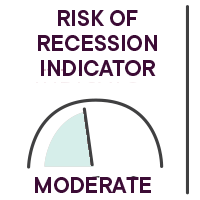
In short, a slowdown in investment decisions could lead to hiring freezes or job losses, and plunge economies in different regions into recession.
A scenario involving a uniform 10% tariff on all imports and some higher tariffs on targeted sectors would enable the U.S. federal government to raise additional revenue and reduce consumer uncertainty, allowing companies to move ahead with their investment decisions.
At present, the markets continue to waver between an economic slowdown and the likelihood of a Fed policy rate cut in the event of job losses, even if inflation is still above target and the economy is stronger than expected. The fiscal deficit is still present in the background and will eventually require serious consideration.
Given the current situation, it seems clear that markets will continue to navigate between the tariff-related economic slowdown and rising inflation. They could also find themselves in a situation where the economy manages to hold up, but government spending is limited to avoid triggering high interest rates that would further dampen the economy.
In Canada, the government takes action
The Canadian government has announced an acceleration of military spending to reach the 5% of GDP contribution requested by NATO. Infrastructure projects such as the development of a mine for metals used by the military industry could be part of this commitment. Increasing this contribution to NATO is a repeated request from the Americans, and by responding to it, Canada is seeking to demonstrate its commitment in a trade negotiation context.
Another action put forward is the recent passing of Bill C-5, which will increase labour mobility between provinces and accelerate the completion of projects of national interest.
What moved the markets in June:
- Effective date of most tariffs postponed to August 1, 2025.
- Attractive results for global stock markets.
|
OVERVIEW OF GLOBAL EQUITY MARKETS |
||||
|
Country |
Index |
Return |
Change |
Year-to-date |
|
Canada |
S&P/TSX |
2.91% |
|
10.17% |
|
United States |
S&P 500 |
4.29% |
|
0.76% |
|
|
Nasdaq |
1.43% |
|
13.33% |
|
International stock markets |
EAFE |
5.21% |
|
11.73% |
|
Emerging markets |
|
3.79% |
|
9.36% |
|
China |
MSCI China |
2.93% |
|
11.32% |

The return shown is the total return, which includes the reinvestment of income and capital gains distributions.
Source: Morningstar Direct.
Results – Canadian bonds
The FTSE Canada Universe Bond Index, which includes Canadian government and corporate bonds, has posted a positive return of 1.44% year to date (at June 30, 2025).
Source : Morningstar Direct.
Our analysis of events

Policy rates
- On June 18, the U.S. Federal Reserve (Fed) kept its rates at their current level. The potential inflationary fallout from U.S. tariff policy could limit cuts in 2025. At the Fed’s next meeting on July 30, the market expects another pause to be announced, followed by rate cuts in September and December 2025.
- The Bank of Canada (BoC) kept its policy rate at 2.75% on June 4, as inflation remained within its target range. Uncertainty over the imposition of tariffs by the United States could alter monetary policy and lead to further rate cuts. At present, markets are anticipating one rate cut in December 2025.
Employment situation
- U.S. job creation was stronger than expected in June, with 147,000 jobs added versus expectations of 110,000. Note that last month’s data were revised upward. Wage inflation is still too high, at 3.7% year-over-year. The unemployment rate fell to 4.1%, while the average number of hours worked also decreased slightly.
- In Canada, 83,000 jobs were added in June, mainly part-time (70,000). The unemployment rate fell by 0.1% to 6.9%. Annual wage growth came in at 3.2%, in line with expectations, and the number of hours worked rose by 0.5%.
Inflation
- In Canada, the annual inflation rate climbed by 0.2% in June to 1.9%. In the United States, the annual inflation rate accelerated in June to 2.7%, up 0.3% on the previous month and its highest level since February 2025.
Factors to consider for the coming months
- August 1 was announced as the new deadline for most tariffs to come into effect. The various parties still have a few weeks to find common ground.
- The aim of reducing regulations in various sectors in the United States is to maintain economic growth and encourage investment. Other countries, including Canada, will have to follow this trend towards deregulation, at the risk of losing competitiveness.
- A trade war supported by the indiscriminate use of tariffs could cause an economic slowdown and a resurgence in inflation Such a situation could lead to an episode of stagflation, which is a distinctly negative economic scenario.
- All inflationary scenarios that would keep yields on 5-to-10-year maturities at high levels should be avoided, since they would curb business investment and the reshoring of production lines to the U.S.
- Geopolitical uncertainty will continue with the Russia-Ukraine war, regional conflicts in the Middle East, tensions between the U.S. and China, and the possible annexation of Taiwan by the Chinese government.
Economic Indicators
Global Purchasing Managers’ Index 
Indicators for the manufacturing segment were down, with almost one half of the thirty countries in the index posting a reading below 50 (contraction). The services segment continues to hold up well and remains robust.
Inflation rate 
Overall, inflation is falling and continuing to move in the right direction, but its speed of deceleration is slowing. The indiscriminate imposition of global tariffs by the new U.S. administration could create inflationary pressures in 2025.
Benchmark rates in Canada, Europe and the United States
Interest rates have been falling for several months now, but fears of a resurgence of inflation in the United States will likely limit future reductions. Given the numerous cuts in recent months, most central banks are now waiting to see how things play out going forward.

Our tactical views
In June, we maintained the weighting of equities in the tactical allocation strategy.
In the United States, our equity weighting remained unchanged, as did our position in large cap growth stocks, which react positively to stabilizing interest rates, as well as in stocks with a track record of dividend growth which are more defensive.
In the fixed-income component, we maintained the weighting of bonds, but increased our exposure to emerging market government bonds and high-yield corporate bonds. We reduced Canadian government bond holdings and invested in U.S. government issues.
We continue to favour stocks in developed countries and focus on risk management.
To learn how our funds performed:
Senior Manager, Asset Allocation and Alternative Strategies
Data source : Bloomberg
The opinions expressed here and on the next page do not necessarily represent the views of Professionals’ Financial. The information contained herein has been obtained from sources deemed reliable, but we do not guarantee the accuracy of this information, and it may be incomplete. The opinions expressed are based upon our analysis and interpretation of this information and are not to be construed as a recommendation. Please consult your Wealth Management Advisor.