


Yann Furic
B.B.A., M. Sc., CFA®
Senior Portfolio Manager, Asset Allocation and Alternative Strategies
On May 12, 2025, U.S. and Chinese officials agreed to reduce the tariff rate to 30% for imports into the U.S. and 10% for imports into China, for a period of 90 days. The agreement implied that Chinese government authorities would allow the resumption of rare mineral exports.
When the two sides met in London on June 9, an agreement in principle was reached whereby Chinese imports into the U.S. will be tariffed at an average rate of 55%, while U.S. imports into China will be subject to a 10% tariff. Negotiations are due to continue on other issues.
New foray into the tariff maze
On May 31, the U.S. President announced a 50% increase in tariffs on imported steel and aluminum. The news was greeted very negatively by Canadian industry.
Since April 2, markets have been awaiting the results of the tariff negotiations.
Why uncertainty hurts economies
The high level of indecision is slowing corporate spending and possibly consumer spending as well.
In the case of businesses, uncertainty over tariff rates may paradoxically slow investment even if it is made with a view to increasing production in the United States.
For example, a U.S. manufacturing company that uses automation to boost productivity may have to order industrial robots from Japan, and therefore pay tariffs. As tariff negotiations are still underway, depending on the time of the transactions, tariffs could be eliminated altogether, reduced, or even increased. In such a context, and with no certainty as to how long the negotiations will take, it is highly likely that this company will postpone its investment decision until a later, unspecified date.
Given this decision-making dynamic, the duration of the tariff war will have a definite effect on the economy as a whole if it continues. Last month, a U.S. federal court ruled that the law used to impose “reciprocal” tariffs had not been complied with and therefore called for a pause. An appeals court subsequently reinstated the tariffs. This situation will most likely be resolved by a Supreme Court decision. As for countries facing tariffs, they could, logically, slow down negotiations pending a court ruling.
Note also that, under its Constitution, the U.S. administration still has the option of unilaterally imposing tariffs, but the process of putting them in place requires analyses and the support of Congress to maintain them after 150 days.
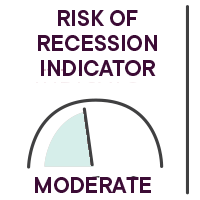
In short, a slowdown in investment decisions could, in the short to medium term, lead to hiring freezes or job losses, and plunge the U.S. economy into recession.
However, a scenario could be envisaged that would enable the U.S. federal government to raise additional revenue and reduce the uncertainty affecting consumers and businesses: a uniform 10% tariff imposed on all imports, as well as more targeted tariffs on certain specific products.
Meanwhile, in the Canadian Parliament
The Canadian government announced an increase in its military spending to 2% of gross domestic product (GDP) by fiscal year 2025-2026. This announcement is in line with repeated U.S. demands to increase Canadian military spending to the 2% minimum required by NATO. It would demonstrate Canada’s commitment to fulfilling its contractual obligations, in the context of Canada-U.S. tariff negotiations.
…. and in the U.S. Congress
In the meantime, the U.S. Congress continues to discuss the budget and maintaining tax cuts, despite a high deficit. The U.S. administration would like to sign the new budget on July 4, Independence Day. Negotiations are ongoing and several senators would like to see major spending cuts to reduce the increase in the debt. For now, the U.S. economy and employment are holding up.
Note that the yield on 10-year U.S. Treasuries plays a watchdog role in managing spending and the resulting deficits. This yield exceeded 4.50% on the night of April 8 (before most tariffs were paused for 90 days on April 9). The 10-year Treasury yield serves as a benchmark for other interest rates, and has an impact on corporate financing, mortgage lending and long-term U.S. debt financing.
The markets are currently wavering between an economic slowdown and the likelihood of a Fed rate cut in the event of job losses, even though inflation is still above target and the economy is stronger than expected. The huge sums committed to the U.S. budget deficit and interest on the debt remain the fly in the ointment.
We can expect the markets to navigate between a tariff-induced slowdown and rising inflation, or an economy that manages to hold up but that has to limit government spending or risk triggering high interest rates that will dampen the economy.
What moved the markets in May:
- Tariff fever subsides during U.S.-China talks in Geneva.
- May 2025: an exceptional month for U.S. stock markets.
|
OVERVIEW OF GLOBAL EQUITY MARKETS |
||||
|
Country |
Index |
Return |
Change |
Year-to-date |
|
Canada |
S&P/TSX |
5.56% |
|
7.05% |
|
United States |
S&P 500 |
5.81% |
|
3.38% |
|
|
Nasdaq |
9.15% |
|
5.11% |
|
International stock markets |
EAFE |
4.09% |
|
11.73% |
|
Emerging markets |
|
3.79% |
|
3.95% |
|
China |
MSCI China |
2.27% |
|
8.1% |

The return shown is the total return, which includes the reinvestment of income and capital gains distributions.
Source: Morningstar Direct.
Results – Canadian bonds
The FTSE Canada Universe Bond Index, which includes Canadian government and corporate bonds, has posted a positive return of 1.38% year to date (at May 31, 2025).
Source : Morningstar Direct.
Our analysis of events

Policy rates
- At the time of the May 7 announcement, the U.S. Federal Reserve (Fed) kept its rates at their current level. The inflationary fallout from U.S. tariff policy will undoubtedly limit rate cuts in 2025. In fact, Fed Chair Jerome Powell noted that uncertainty about inflation and employment has increased. Markets are hoping for a rate cut announcement at the Fed’s next meeting on June 18.
- In Canada, the policy rate is still 2.75% and inflation remained within its target range. Uncertainty over the imposition of tariffs by the United States could alter monetary policy and lead to further rate cuts. At present, markets are anticipating one more rate cut in 2025.
Employment situation
- U.S. job creation was stronger than expected in May, with 139,000 jobs added versus expectations of 126,000. Once again, last month’s data were revised downwards. Wage inflation is still too high, at 3.9% year-over-year. The unemployment rate was stable at 4.2%, while the average number of hours was unchanged.
- In Canada, 8,800 jobs were added in May, far exceeding forecasts of a loss of 10,000 jobs. 57,700 full-time jobs were added, while 48,800 part-time jobs (mainly workers hired for the federal election) were lost. Even so, the unemployment rate rose by 0.1% to 7.0%. Year-on-year wage growth came in at 3.5%, exceeding expectations of 3.2%.
Inflation
- In Canada, the annual inflation rate was 1.7% in April, down 0.6% from the previous month (2.3%), the GST holiday during the Holiday season and the reduction in the carbon tax making this number less reliable. In the United States, the annual inflation rate fell by 0.1% to 2.3% in April. This number reflects the situation before the real impact of the tariffs.
Factors to consider for the coming months
- The reduction of regulations in various sectors of the U.S. economy should help maintain economic growth and encourage investment. Other countries, such as Canada, will have to follow this trend towards deregulation at the risk of losing competitiveness.
- A trade war supported by the indiscriminate use of tariffs could cause an economic slowdown and a resurgence in inflation, that is, an episode of stagflation, the most negative economic scenario.
- Inflationary scenarios that would keep yields on 5-to-10-year maturities at high levels should be avoided, since they would curb business investment and the reshoring of production lines to the U.S.
- Geopolitical uncertainty will continue: Russia-Ukraine war, regional conflicts in the Middle East, tensions between the U.S. and China, possible annexation of Taiwan by the Chinese government and tensions between India and Pakistan.
Economic Indicators
Global Purchasing Managers’ Index 
Indicators for the manufacturing segment were down, with almost two-thirds of the thirty countries in the index posting a reading below 50 (contraction). The services segment continues to hold up well and remains robust.
Inflation rate 
Overall, inflation is falling and continuing to move in the right direction, but its speed of deceleration is still slowing. It seems increasingly clear that central banks will not make the same number of rate cuts as anticipated a few months ago. In 2025, the indiscriminate imposition of global tariffs by the U.S. administration could create inflationary pressures.
Benchmark rates in Canada, Europe and the United States
Interest rates have been falling for several months now, but fears of a resurgence of inflation in the United States could limit the decline. In contrast, Canada and Europe are facing tariff threats, and their lower inflation is enabling their central banks to maintain their rates or lower them further.

Our tactical views
In May, we increased the weighting of equities in the tactical allocation strategy.
In the United States, we increased our equity weighting and our position in large cap growth stocks, which react positively to stabilizing interest rates, as well as in stocks with a track record of dividend growth which are more defensive.
In the fixed-income component, we reduced the weighting of bonds and maintained their quality by holding only Canadian and U.S. government bonds.
We continue to favour stocks in developed countries and focus on risk management.
To learn how our funds performed:
Senior Manager, Asset Allocation and Alternative Strategies
Data source : Bloomberg
The opinions expressed here and on the next page do not necessarily represent the views of Professionals’ Financial. The information contained herein has been obtained from sources deemed reliable, but we do not guarantee the accuracy of this information, and it may be incomplete. The opinions expressed are based upon our analysis and interpretation of this information and are not to be construed as a recommendation. Please consult your Wealth Management Advisor.